

March 3, 2025 by Kenneth Cheng | Mission Kay Capital’s Principal
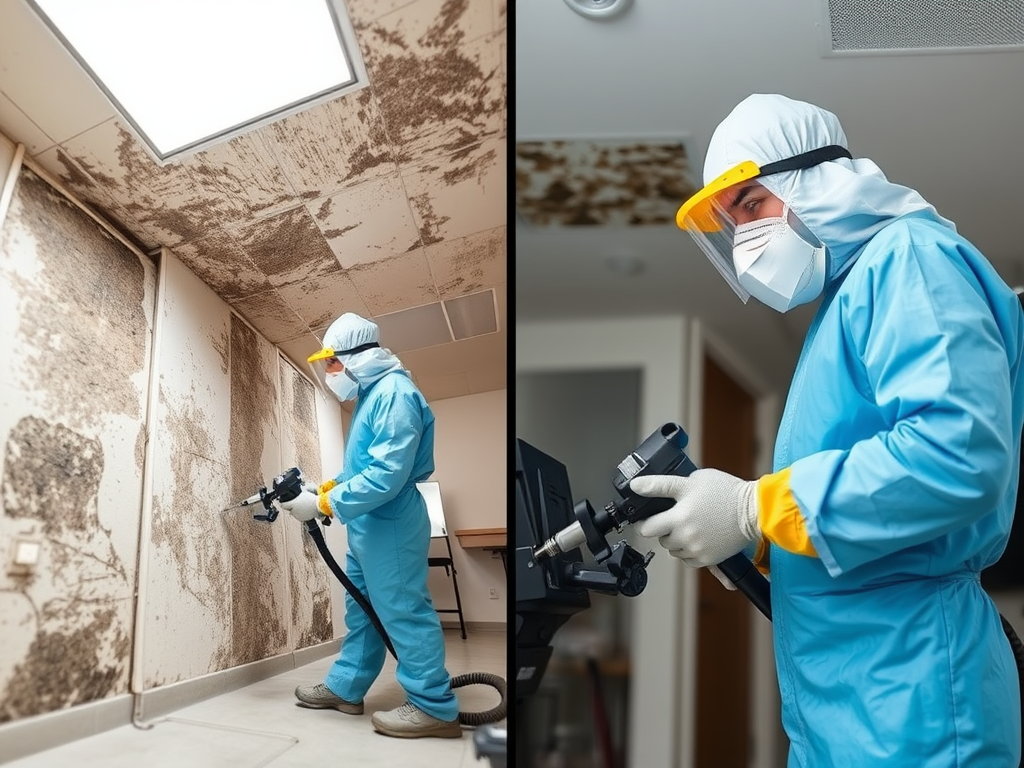
At Mission Kay Capital, we continuously explore industries that offer strong investment opportunities for long-term growth. One sector that has caught our attention is hygiene services, specifically mould removal. While often overlooked, mould removal plays a crucial role in maintaining indoor air quality and structural integrity in Singapore’s humid climate.
However, for traditional search funds, investing in this sector presents both challenges and opportunities. In this article, we take a closer look at the landscape of the mould removal industry, the barriers to entry, and why it might still be an attractive target for investor-operators.
The Mould Removal Industry in Singapore: Market Overview
Mould removal is typically offered as a complementary service by pest control or hygiene cleaning companies in Singapore. The demand is driven by Singapore’s tropical climate, which creates an ideal environment for mould growth, particularly in residential and commercial properties.
Key Market Characteristics:
- We estimate the market size for mould removal services in Singapore is somewhere in between S$20–30 million.
- Services range from residential mould remediation to large-scale commercial decontamination in high-risk areas like healthcare, food service, and office buildings.
- Consumer awareness of mould-related health risks (e.g., respiratory issues, allergies) has increased, contributing to steady demand.
- Mould removal services are often bundled with pest control or general hygiene services, making it a fragmented industry with small standalone providers.
While the market shows stable demand, search fund investors must consider specific challenges and constraints before pursuing acquisitions in this space.
Challenges for Search Funds in the Mould Removal Sector
Although the mould removal industry has promising aspects, traditional search funds face a few hurdles when assessing investment opportunities.
- Market Size and Growth Limitations: Unlike broader hygiene services or pest control, mould removal is a relatively niche industry. The estimated S$20–30 million market size suggests that scaling within Singapore alone could be restrictive. That said, investors who combine mould removal with complementary hygiene services (e.g., pest control, air purification, industrial cleaning) may be able to tap into a much larger addressable market and create a competitive edge.
- Absence of contractual recurring revenue: Most mould removal company’s core segment rely on B2C customers. Whilst there are some repeat customers, the typical revenue mix come from once-off customers rather than those that are recurring.
- Industry Consolidation: Over the past few years, Singapore’s mould removal market has seen moderate consolidation, led by two strategic players acquiring smaller businesses. This presents a mixed outlook for search fund investors:
- On one hand, consolidation limits the number of standalone companies available for acquisition.
- On the other, the presence of strategic acquirers suggests a clear exit path, increasing the attractiveness of the sector.
Despite these challenges, mould removal presents unique opportunities for investors who can navigate the market effectively.
Opportunities in Mould Removal Services
For those willing to take a strategic approach, mould removal still offers attractive investment potential. Below are three key opportunities that could make this sector an interesting play for search fund investors.
- A Roll-Up Strategy in a Fragmented Market: The mould removal market remains highly fragmented, with many small businesses operating independently. This fragmentation creates an opportunity for strategic consolidation, where a search fund investor could acquire multiple small players and build a stronger, more dominant business. The key to success would be identifying a strong anchor company—one with an established customer base, operational expertise, and brand reputation—before acquiring smaller complementary businesses to scale up.
- A Clear Exit Path Due to Ongoing Consolidation: The presence of larger strategic buyers in Singapore’s hygiene services sector signals acquisition demand, which could benefit a search fund investor planning a 3–7 year hold strategy. By consolidating smaller players and building a market leader, investors could position the business for acquisition by larger competitors, ensuring a clear and profitable exit strategy.
- High Gross Margins & Sustainable Cash Flow: Based on industry discussions, we’ve observed that mould removal services operate at exceptionally high gross margins—up to 80–90%.
For a search fund investor, this means a business in this sector could generate consistent cash flow, making it financially attractive despite its smaller size.
Conclusion: Is Mould Removal an Attractive Industry for Search Funds?
While the mould removal market in Singapore is relatively small, it has several qualities that make it an interesting target for the right search fund investor.
- Stable industry, the mould removal industry is steadily growing because of consumer awareness (harmful indoor air quality particularly related to chemicals and mould).
- Cross-border expansion, for those willing, mould is a problem in the whole of Southeast Asia, making this a big market for mould removal services.
- High gross margins (80–90%), providing strong profitability potential.
- Fragmented market, allowing for a roll-up strategy.
- Existing industry consolidation, creating a clear exit path.
That said, the biggest challenge remains the small size of existing companies. Investors looking at this space may need to adopt a consolidation strategy, acquiring multiple small players to scale operations.
Connect with us if you know business owners in the fire protection sector considering succession, we would love to connect.


Leave a Reply