

March 10, 2025 by Shanice Chin | Mission Kay Capital’s Industry Specialist
Understanding the Maritime Industry in Singapore
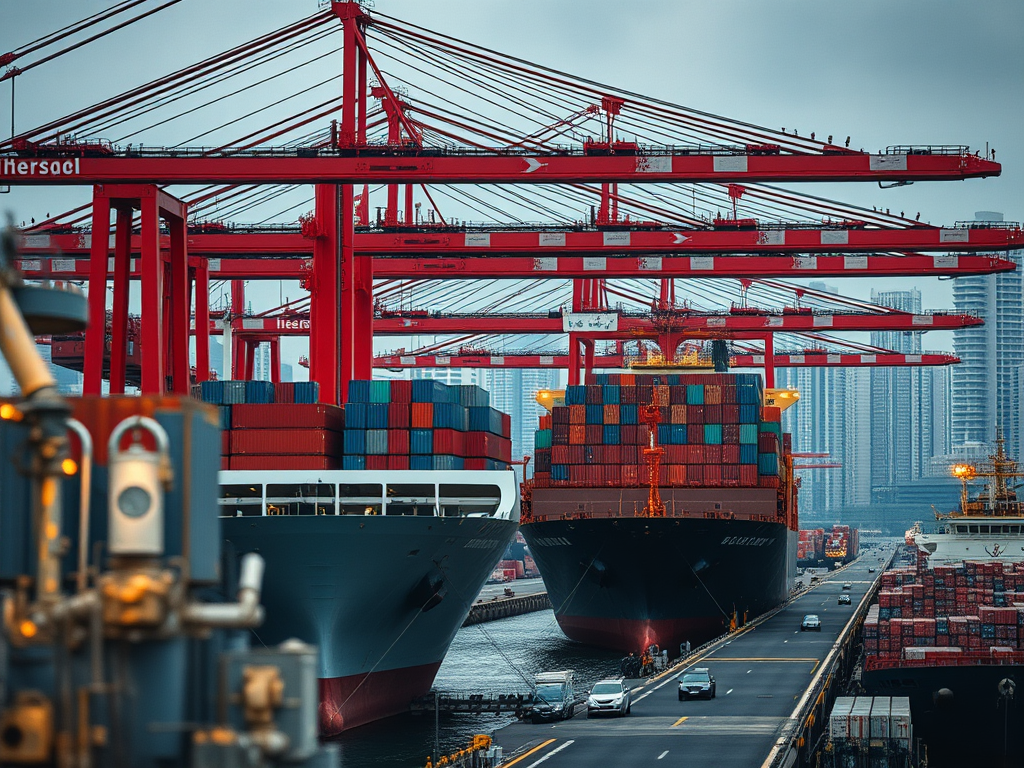
Singapore’s maritime sector has long been a cornerstone of global trade and logistics. As one of the world’s busiest ports, Singapore not only serves as a major transshipment hub but also drives innovation in maritime technology, sustainability, and operational efficiency.
At its core, Singapore’s maritime ecosystem can be broadly categorized into three key segments: first, the port operations that handle massive volumes of cargo and container throughput; second, the ships themselves — from commercial vessels to specialized carriers; and third, the maritime support network, a robust eco-system of shore-based maritime companies that provide critical support services ranging from ship finance and insurance to logistics and regulatory compliance. Together, these components ensure that Singapore remains at the forefront of the global maritime industry.
A Snapshot of Maritime Singapore
In 2024, the Port of Singapore achieved record-breaking performance across several critical metrics. Vessel arrival tonnage reached a record level that highlights the continued high demand for shipping services, particularly among bulk carriers, container ships, and tankers. Container throughput also climbed, further reinforcing Singapore’s reputation as the world’s largest transshipment hub. Cargo volumes and marine fuel sales experienced healthy year-on-year gains, driven partly by evolving refuelling strategies amid global geopolitical shifts. Notably, the rapid uptake of alternative bunker fuels highlights a meaningful shift toward sustainable maritime operations, demonstrating both operational excellence and environmental commitment in a rapidly evolving industry.
A key driver behind Singapore’s continued maritime success is the transformative expansion of Tuas Port. Designed to become one of the world’s largest fully automated ports, Tuas Port is poised to dramatically enhance Singapore’s transshipment capacity. With 11 berths already operational and an additional 7 planned by 2027, this strategic development will reduce vessel turnaround times, streamline cargo handling, and bolster Singapore’s competitive edge on the global stage. The future of Tuas Port is set to redefine efficiency in port operations, further cementing Singapore’s status as a leading maritime hub.
Diving into the Maritime Value Chain
The maritime industry value chain in Singapore can be broadly segmented into three categories, each containing several interconnected fragments. Every fragment plays a crucial role in ensuring smooth, efficient, and sustainable maritime operations.
1. Ports and Terminal Operations
Singapore’s world-class port facilities, managed by PSA, serve as the backbone of the industry. Advanced container handling, efficient cargo throughput, and state-of-the-art bunkering services are supported by ongoing infrastructure projects like the aforementioned Tuas Port expansion, which is set to dramatically boost capacity and operational efficiency.
- Container Handling and Cargo Throughput: Involves the loading, unloading, and storage of containerized and bulk cargo at world-class facilities.
- Bunkering and Fuel Services: Supplies traditional marine fuels and increasingly alternative bunker fuels to vessels.
- Digital and Operational Efficiency Initiatives: Implements automation, e-BDN, and smart port technologies to streamline operations and reduce congestion.
- Infrastructure Expansion: Ongoing developments including the Tuas Port expansion that enhance capacity and efficiency.
2. Shipping and Vessel Operations
Leveraging its strategic location, Singapore manages a diverse fleet, from bulk carriers and tankers to specialized vessels, ensuring optimal vessel performance through robust fleet management, regular ship repairs, and stringent regulatory compliance. These elements sustain a reliable flow of maritime traffic and underline Singapore’s status as a top global ship registry.
3. Maritime Support Network
Beyond physical operations, Singapore’s IMC comprises a network of shore-based support services. This includes financial and legal advisory, logistics and supply chain management, maritime technology innovation, and specialized consulting. Together, these services ensure the smooth running of operations at sea and foster a dynamic environment for innovation and sustainable growth.
- Financial & Legal Services: Encompasses ship financing, insurance, arbitration, and legal advisory tailored to maritime operations.
- Logistics & Supply Chain Solutions: Shore-based companies that handle marine logistics, procurement, and supply chain management.
- Maritime Technology & Innovation: Involves maritime tech startups, R&D, and digital solutions that support port operations, vessel efficiency, and sustainability.
- Support Services: Includes shipbroking, consulting, and other ancillary services such as ship chandling, which supplies vessels with essential goods and supplies while at port.
Global Maritime Trade – Steady Growth with Technological & Sustainability Shifts
Globally, seaborne trade remains a vital engine of economic growth. Despite geopolitical challenges, like the recent tariff spat between the US and other key countries and evolving environmental regulations, the United Nations Conference on Trade and Development (UNCTAD) forecasts that total maritime trade will grow at an annual average of around 2.4% from 2025 to 2029, with containerized trade increasing by approximately 2.7%. The industry is also undergoing a technological and sustainability transformation, as shipping companies adopt alternative fuels and digital solutions to reduce emissions and improve efficiency. This steady global momentum reinforces Singapore’s strategic role as a leading maritime hub, further underscoring the sector’s long-term potential for investors.
Is the Maritime Industry attractive for Search Funds?
An experienced search fund investor who has reviewed dozens of businesses from diverse industries has identified the maritime services sector as an unconventional industry with huge untapped potential – you can find his views here.
At Mission Kay Capital, we tend to agree especially given that Singapore’s maritime industry shows stable growth, robust infrastructure, and innovative trends, making it an attractive target for search funds.
- Stable Industry: Driven by Singapore’s strategic location and world-class port infrastructure, the sector benefits from steady global trade flows.
- Infrastructure Expansion: Ongoing developments, such as the expansion of Tuas Port and smart port initiatives, promise increased capacity and efficiency.
- Fragmented Niches: Certain segments remain fragmented, presenting attractive roll-up and consolidation strategies with clear exit paths.
These growth drivers, combined with Singapore’s status as a world-class Maritime Centre, create a dynamic environment that is attractive for strategic investors, including search funds. While global trade uncertainties and fierce competition remain challenges, the long-term outlook is positive for those who can capitalize on the industry’s inherent strengths and evolving technological trends.
Connect with us if you know business owners in the maritime industry considering succession, we would love to connect.
Sources: Maritime and Port Authority of Singapore (MPA), Reuters, United Nations Conference on Trade and Development (UNCTAD) Reports
 Search Fund | Mission Kay Capital
Leave a comment